Jerusalem in July: A Month of Israeli Escalation Against Al-Aqsa, Jerusalemites, and Settlement Expansion
Occupied Jerusalem – Al-Hayat Al-Jadida
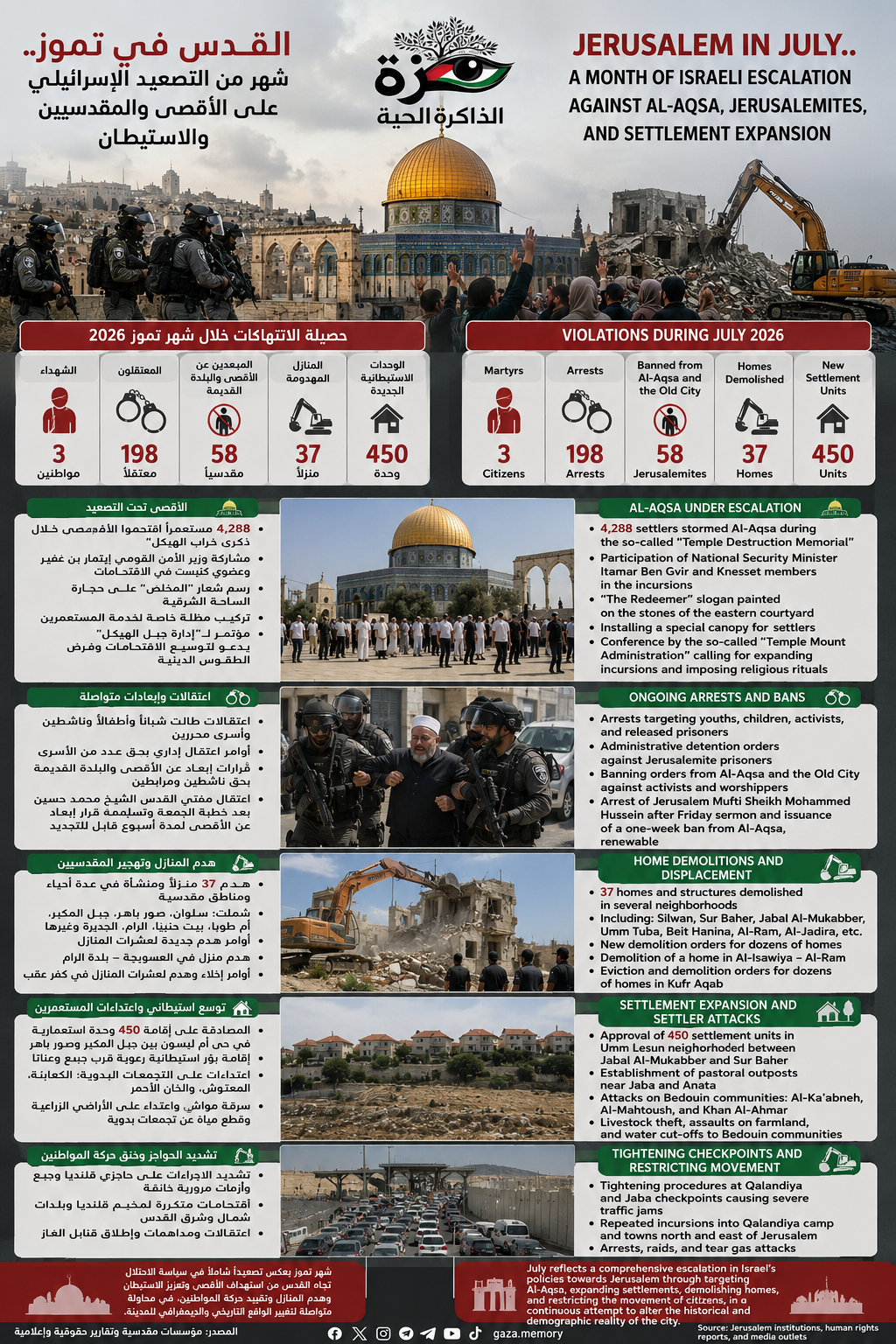
During July, occupied Jerusalem experienced a broad Israeli escalation that affected various aspects of Palestinian life, focusing particularly on Al-Aqsa Mosque, Jerusalem neighborhoods, and Bedouin communities surrounding the city. This occurred through intensified raids, heightened military measures, and stricter restrictions on residents, along with the continuation of home demolitions, arrests, deportations, and settlement expansion.
During the month, three citizens from the Jerusalem Governorate were killed, while daily arrest campaigns and raids continued across various towns and neighborhoods. This coincided with the ongoing targeting of Al-Aqsa guards, murabiteen (faith defenders/activists), activists, and journalists through deportation orders and bans from entering the mosque and the Old City.
Al-Aqsa Under Escalation
Al-Aqsa Mosque was at the forefront of occupation targets during July, enduring daily raids under the protection of Israeli police. These coincided with calls from "Temple groups" to conduct large-scale incursions during the so-called "destruction of the Temple" anniversary.
The number of settlers who stormed the courtyards of Al-Aqsa Mosque during this occasion reached approximately 4,288 settlers, amid a heavy deployment of occupation forces that transformed the mosque's surroundings and entrances into a closed military zone. The raids included the participation of Israeli National Security Minister Itamar Ben-Gvir and Knesset members Amit Halevi and Nissim Vaturi.
The mosque witnessed unprecedented violations during the month, most notably:
Settlers painting the "Savior" symbol on stones in the eastern courtyard of Al-Aqsa.
Constructing a special canopy to serve settlers during raids—a step considered an attempt to impose new facts on the ground within its courtyards, particularly in the eastern area.
Ministers and Knesset members from the Likud party also participated in a conference organized by entities called the "Temple Mount Administration," during which participants called for expanding incursions and allowing religious rituals inside Al-Aqsa Mosque as part of attempts to alter its historical and legal status quo.
Ongoing Arrests and Deportations
Occupation authorities continued their policy of arrests and deportations against Jerusalemites during July. Arrests targeted youth, children, activists, and former prisoners across various parts of Jerusalem, while administrative detention orders were issued against several Jerusalemite prisoners.
Israeli police also continued issuing deportation orders from Al-Aqsa Mosque and the Old City against activists, murabiteen, and prominent Jerusalem figures. Notably, this included the arrest of the Grand Mufti of Jerusalem and the Palestinian Territories, Sheikh Mohammad Hussein, following the Friday sermon at Al-Aqsa Mosque, handing him a one-week renewable deportation order from the mosque.
Home Demolitions and Displacement of Jerusalemites
The policy of demolishing Palestinian homes and structures continued throughout the month. Israeli municipal crews carried out demolitions in several neighborhoods and forced families to self-demolish their homes to avoid exorbitant demolition fees.
Demolition operations included homes in:
Silwan, Sur Baher, Jabal al-Mukabbir, Umm Tuba, Beit Hanina, Al-Ram, and Al-Judeira, among other areas.
New demolition orders were also issued against Jerusalemite families under the pretext of building without a permit.
Occupation authorities also demolished a home in the Al-Iswaija neighborhood of Al-Ram and issued orders to evacuate and demolish dozens of homes in Kafr 'Aqab, as part of a policy aimed at stifling the Palestinian presence in the city and its surroundings.
Settlement Expansion and Settler Attacks
July witnessed a surge in settlement activity, including the establishment of new outpost nodes, the expansion of existing ones, and the approval of new plans within Jerusalem and its environs.
Major Plans: The approval to construct approximately 450 settlement units in the Umm Lison neighborhood between Jabal al-Mukabbir and Sur Baher.
Outposts: The establishment of pastoral outposts near Jaba' and Anata, along with ongoing attempts to seize land and Bedouin communities.
Settlers also continued their attacks on Bedouin communities east of Jerusalem, particularly the Ka'abneh, Al-Mahtoush, and Khan al-Ahmar communities, by grazing sheep among residents' homes, attempting to steal livestock, attacking agricultural lands, and cutting off water lines to several communities.
Tightening Checkpoints and Stifling Movement
Occupation forces continued tightening measures at military checkpoints during the month, particularly the Qalandia and Jaba' checkpoints, causing severe traffic jams and obstructing movement for long hours. They also carried out repeated raids into Qalandia refugee camp and towns north and east of Jerusalem, accompanied by arrests, raids, and tear gas deployment.
According to the report, the month of July reflected a comprehensive escalation in occupation policies toward Jerusalem through targeting Al-Aqsa Mosque, bolstering settlement expansion, demolishing homes, and restricting movement in an ongoing attempt to alter the historical and demographic reality of the occupied city.
.