Al-Aqsa Mosque
Press coverage and detailed reports on unfolding events
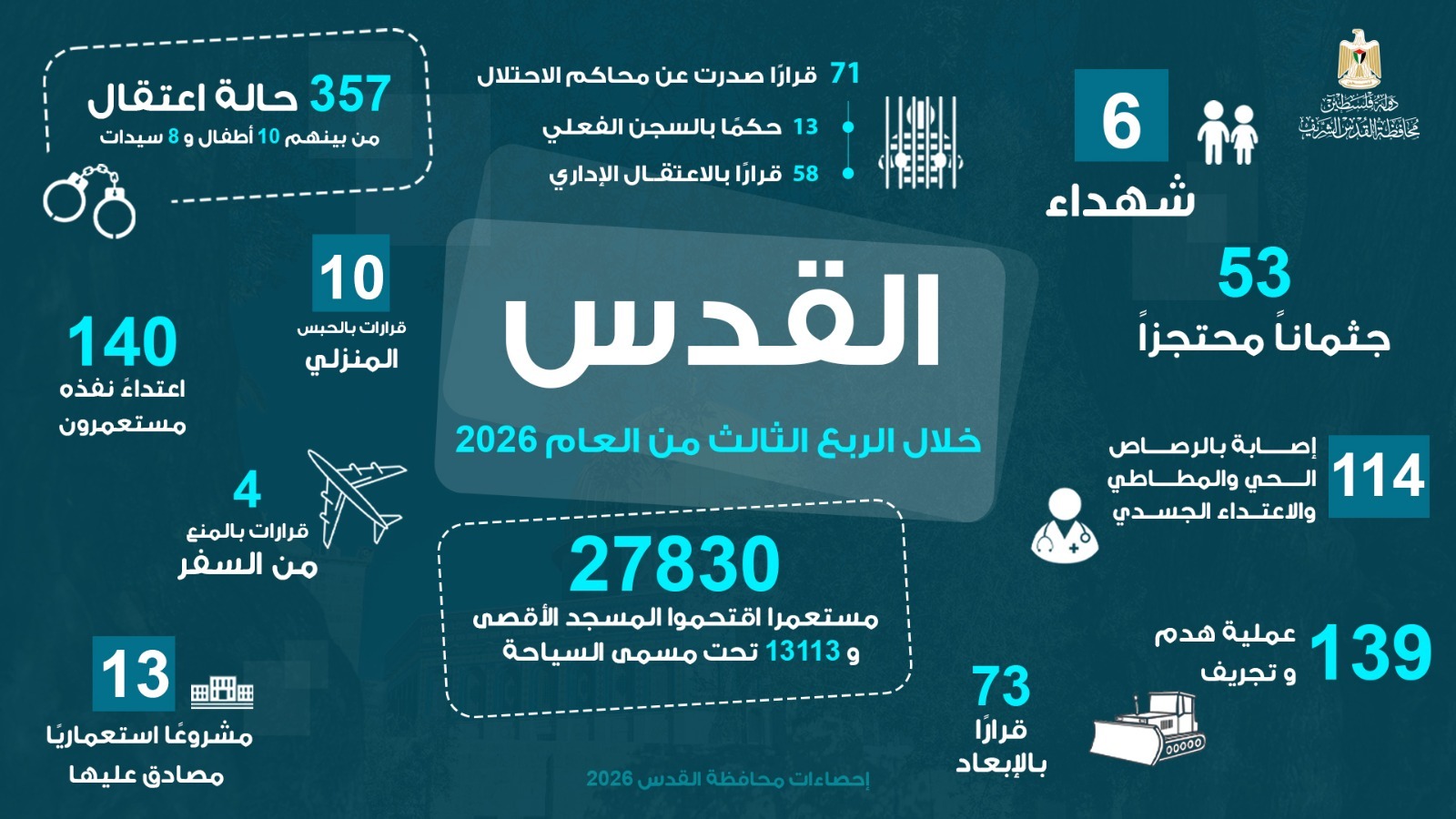
Jerusalem: 6 martyrs, 27,830 settlers storming Al-Aqsa, and 139 demolition and leveling operations during the third quarter of 2026.
القدس 1-10-2026- رصدت محافظة القدس خلال الربع الثالث من عام 2026، استشهاد ستة مواطنين، واقتحام 27,830 مستعمرا المسجد الأقصى المبارك، وتنفيذ 139 عملية هدم وتجريف، و357 حالة اعتقال، إلى جانب إصدار 73 قرارا بالإبعاد، معظمها عن المسجد الأقصى المبارك.
وأوضحت المحافظة، في تقريرها الربعي الصادر اليوم الخميس،، أن الأشهر الثلاثة شهدت تصعيدًا في الانتهاكات الإسرائيلية بحق مدينة القدس ومحيطها، شمل الاعتداءات على المسجد الأقصى، وحملات الاعتقال والإبعاد، وهدم المنازل والمنشآت وتجريف الأراضي، والاستيلاء على الممتلكات، وتقييد حركة المقدسيين، واستهداف التجمعات البدوية، إلى جانب مواصلة المشاريع الاستعمارية.
6 الشهداء
وخلال الربع الثالث، ارتقى ستة مواطنين من محافظة القدس برصاص قوات الاحتلال الإسرائيلي، وهم: وليد نضال أبو سنينة في مخيم قلنديا، ونصر زعل كعابنة قرب جدار الفصل في بيرنبالا، وخليل رشاد حامد الرشق عند حاجز مخيم شعفاط، وخليل عباس خليل الأعور وأحمد خليل عباس الأعور خلال اقتحام بلدة سلوان، وإبراهيم الهندي قرب باب العامود.
وبذلك ارتفع عدد شهداء محافظة القدس منذ بداية العام إلى 17 شهيدا، حتى 4 أيلول/سبتمبر 2026.
27,830 مستعمر اقتحموا المسجد الأقصى
وشهد المسجد الأقصى المبارك خلال الربع الثالث تصعيدا في الاقتحامات والانتهاكات، إذ بلغ عدد المستعمرين المقتحمين 27,830، إضافة إلى 13,113 شخصًا دخلوا المسجد تحت غطاء ما يسمى "السياحة".
وأشارت المحافظة إلى أن التصعيد لم يقتصر على زيادة أعداد المقتحمين، بل شمل توسيع نطاق الممارسات والطقوس الدينية، بما فيها أداء الصلوات الجماعية، والسجود، والنفخ في "الشوفار"، وإدخال كتب الصلاة والأدوات والقرابين النباتية، بمشاركة وزراء وأعضاء كنيست وحاخامات وقيادات جماعات "الهيكل"، وتحت حماية شرطة الاحتلال.
وكانت أبرز محطات التصعيد خلال ما يسمى "ذكرى خراب الهيكل" في 23 تموز/يوليو، حين اقتحم المسجد 4,248 مستعمرا، بمشاركة الوزير إيتمار بن غفير وعدد من المسؤولين.
كما شهد المسجد خلال ما يسمى "رأس السنة العبرية" و"يوم الغفران" و"عيد العرش" تكرار الصلوات والطقوس العلنية داخل المسجد ومحيطه، بالتزامن مع القيود المفروضة على دخول المصلين المسلمين، وإغلاق بعض الأبواب، وإبعاد المقدسيين، والتضييق على موظفي دائرة الأوقاف.
114 إصابة
ورصدت المحافظة 114 إصابة خلال الربع الثالث، توزعت بين إصابات بالرصاص الحي والمطاطي، واعتداءات بالضرب، وإصابات بالغاز المسيل للدموع، وأخرى نتيجة رش غاز الفلفل من قبل المستعمرين.
وتركزت الإصابات في مخيم قلنديا وبلدتي كفر عقب والرام، إلى جانب حزما وأبو ديس ووادي الجوز وبيت عنان وشعفاط وسلوان والطور وبدو وبير نبالا، إضافة إلى التجمعات البدوية، ولا سيما التبنة والعراعرة.
140 اعتداء نفذه المستعمرون
وسجلت محافظة القدس 140 اعتداءً نفذه المستعمرون خلال الربع الثالث، بينها 15 اعتداء بالإيذاء الجسدي.
وشملت الاعتداءات الاعتداء على المواطنين، ورشق المركبات بالحجارة، ومهاجمة المنازل والممتلكات، والاستيلاء على منازل مقدسيين، والاعتداء على الأراضي الزراعية، وإقامة البؤر الاستعمارية والتوسع فيها، والسيطرة على مصادر المياه، وملاحقة التجمعات البدوية ورعاة الأغنام، والاعتداء على الكنائس والأماكن الدينية المسيحية.
وتركزت الاعتداءات في التجمعات البدوية والأحياء الفلسطينية والبلدة القديمة، وتصاعدت خلال موسم الأعياد العبرية في أيلول/سبتمبر، بالتزامن مع تنفيذ طقوس دينية، وإغلاق طرق، ورفع أعلام الاحتلال.
اعتقال 357 مواطنا
ورصدت المحافظة اعتقال 357 مواطنًا خلال الربع الثالث، بينهم 10 أطفال و8 سيدات، في إطار حملات اعتقال طالت مختلف مناطق محافظة القدس.
وشملت الاعتقالات اقتحام المنازل والأحياء، والتوقيفات الميدانية على الحواجز والطرقات، والمداهمات والاحتجازات، إلى جانب استخدام القوة والاعتداء بالضرب والتخويف.
وتوزعت الاعتقالات على مناطق عدة، أبرزها مخيم قلنديا، وكفر عقب، والرام، وسلوان، والعيسوية، وأبو ديس، وعناتا، وجبل المكبر، وبيت دقو، وقطنة، وبدو، وحزما، وبير نبالا، والبلدة القديمة ومحيط المسجد الأقصى.
وطالت الاعتقالات الأطفال والنساء والمصلين والشخصيات الدينية والصحفيين والكتاب والأسرى المحررين والناشطين والعمال الفلسطينيين.
قرارات المحاكم والحبس
وثقت المحافظة خلال الربع الثالث 71 حكمًا وقرارا بحق الأسرى المقدسيين، بينها 58 قرارا بالاعتقال الإداري، و13 حكمًا بالسجن الفعلي، تراوحت مددها بين شهر ونصف و22 عامًا ونصف العام.
كما أصدرت سلطات الاحتلال 10 قرارات بالحبس المنزلي القسري بحق مواطنين مقدسيين.
وأشارت المحافظة إلى استمرار إصدار المحاكم الإسرائيلية قرارات تتضمن فرض غرامات مالية، والحبس المنزلي، والإبعاد ومنع السفر، إلى جانب تمديد الاعتقال الإداري في بعض الحالات.
73 قرار إبعاد
ورصدت المحافظة إصدار 73 قرارا بالإبعاد خلال الربع الثالث، بينها 63 قرارا عن المسجد الأقصى المبارك، طالت حراسًا وموظفين وخطباء وأسرى محررين وصحفيين ونشطاء وشبانًا.
وتوزعت القرارات بواقع 17 قرارا في تموز/يوليو، و6 في آب/أغسطس، و50 في أيلول/سبتمبر، مع تسجيل التصعيد الأكبر في أيلول، بالتزامن مع موسم الأعياد العبرية.
وتراوحت مدد الإبعاد بين أسابيع وستة أشهر، وشملت في بعض الحالات تحديد مناطق يحظر دخولها داخل المسجد ومحيطه.
كما رصدت المحافظة أربعة قرارات بمنع السفر خلال الربع الثالث، استهدفت شخصيات مقدسية ونشطاء وأسرى محررين.
139 عملية هدم وتجريف
ووثقت المحافظة تنفيذ 139 عملية هدم وتجريف خلال الربع الثالث، بينها 35 عملية هدم ذاتي قسري، أُجبر خلالها مواطنون على هدم منازلهم أو منشآتهم، و96 عملية هدم نفذتها آليات الاحتلال مباشرة، إضافة إلى 8 عمليات تجريف استهدفت أراضي ومنشآت ومرافق فلسطينية.
وشملت عمليات الهدم والتجريف سلوان، وجبل المكبر، وبيت حنينا، وعناتا، والرام، ورافات، وحزما، وجبع، وأم طوبا، وقلنديا، إلى جانب استهداف تجمعات سكانية ومنشآت زراعية وتجارية وحظائر للأغنام وأسوار وطرق وأراضٍ زراعية ومصادر للمياه والطاقة.
150 إخطارا وقرارا بالهدم والإخلاء والاستيلاء على الممتلكات
كما وثقت المحافظة 150 إخطارًا وقرارًا متعلقًا بالهدم والإخلاء والاستيلاء، بينها 140 إخطارًا وقرارًا بالهدم، و3 قرارات بالإخلاء، و7 قرارات بمصادرة الممتلكات والأراضي.
وتوزعت هذه الإجراءات بواقع 27 قرارًا في تموز، و86 في آب، و37 في أيلول، وشملت منازل ومنشآت في كفر عقب وعناتا وسلوان وصور باهر ووادي الحمص.
وتنوعت الإجراءات بين إخطارات بالهدم ووقف البناء، وأوامر إخلاء، ومصادرة أراضٍ وممتلكات لأغراض مختلفة، فيما شهد آب إخطار عشرات العقارات بالهدم، بينها 36 عقارًا في عناتا.
كما شملت الإجراءات الاستيلاء على منزل الأسير الجريح قدري سمارة في بلدة بدو وإخطارًا بهدمه، إلى جانب قرارات أخرى استهدفت منازل ومنشآت مقدسية.
استهداف المؤسسات والمعالم المقدسية
ورصدت المحافظة تصعيدًا في استهداف المؤسسات والمعالم الدينية والتعليمية والوطنية والدولية، إلى جانب التضييق على حرية العبادة والعمل الصحفي واستهداف مؤسسات وكالة غوث وتشغيل اللاجئين الفلسطينيين "الأونروا".
وشملت أبرز الانتهاكات اعتقال مفتي القدس وخطيب المسجد الأقصى الشيخ محمد حسين وإبعاده، واقتحام مدارس فلسطينية وتهديدها بالإغلاق، وتحويل مقار مدنية في قلنديا وأبو ديس إلى مراكز احتجاز وتحقيق، إضافة إلى اقتحام معهد "الأونروا" في كفر عقب والسيطرة عليه، واعتقال عدد من العاملين والصحفيين والنشطاء.
كما طالت الاعتداءات دور العبادة المسيحية والإسلامية، من خلال الاعتداء على الكنائس والأديرة وإغلاق جامع العمري، بالتزامن مع استمرار استهداف المؤسسات التعليمية الفلسطينية وموظفيها واحتجاز موظفين وصحفيين.
الأسرى والمحررون المقدسيون
وشهد الربع الثالث استمرار الانتهاكات بحق الأسرى والمعتقلين والأسرى المحررين المقدسيين، عبر الاعتقال وإعادة الاعتقال والإبعاد عن المسجد الأقصى ومنع السفر وفرض قيود على الحركة.
وخلال تموز وآب وأيلول، أبعدت سلطات الاحتلال عددا من الأسرى المحررين عن المسجد الأقصى لمدة ستة أشهر، بينهم عرين الزعانين ومراد عليان وأيهم جمعة وصالح ماجد أبو الحمص، فيما جددت إبعاد ناصر الهدمي، وأصدرت قرارًا بإبعاد أحمد شويات لمدة أسبوع قابل للتجديد، كما جددت منع مراد عليان من السفر خارج البلاد لمدة ستة أشهر.
وشهد الربع الثالث إعادة اعتقال عدد من الأسرى المحررين، بينهم عرين الزعانين وعبد الله علي داود، فيما أفرج عن جون قاقيش بعد عشرة أيام مع فرض الحبس المنزلي وغرامة مالية ومنعه من التواصل مع عدد من الأشخاص.
كما التحق محمد عمران الشاويش بسجن الرملة لقضاء محكومية مدتها ثمانية أشهر.
وفي السجون، وثقت إفادات الأسرى والأسيرات استمرار سوء التغذية والإهمال الطبي والاعتداءات الجسدية واللفظية، ونقص الملابس ومواد النظافة، والقيود على الاستحمام والفورة، إلى جانب العقوبات الجماعية والتفتيش العاري بحق الأسيرات، واستمرار هذه الانتهاكات بحق الأشبال والأسرى المرضى.
المشاريع الاستعمارية
ووثقت محافظة القدس، استنادا إلى المتابعة اليومية للإعلانات الرسمية الصادرة عن ما تسمى "الإدارة المدنية" وبلدية الاحتلال في القدس، إضافة إلى ما وثقه مركز بيت الشرق، 55 مخططًا ومشروعًا ونشاطًا استعماريًا خلال الربع الثالث.
وشملت هذه الأنشطة المخططات الهيكلية والمشاريع الاستعمارية وإنشاء البؤر الاستعمارية وأعمال شق الطرق والإجراءات المتعلقة بالأراضي.
وبيّنت المعطيات أن من بين هذه الأنشطة 15 مخططا تم إيداعها، تضمنت إنشاء 3,465 وحدة استعمارية سكنية على مساحة إجمالية بلغت 164.917 دونما.
كما صادقت سلطات الاحتلال على 13 مخططًا، تضمنت إنشاء 811 وحدة استعمارية سكنية على مساحة إجمالية بلغت 305.247 دونمًا.
وأوضحت المحافظة أن أعداد الوحدات الواردة في الإحصائية تقتصر على الوحدات الاستعمارية السكنية، ولا تشمل المباني والمنشآت المخصصة للاستعمالات العامة أو التعليمية أو الصحية أو الدينية أو التجارية والخدمية.
وفي السياق ذاته، رصدت المحافظة 10 مناقصات وإعلانات متعلقة بمشاريع استعمارية، شملت مناقصات لبناء وحدات استعمارية سكنية وأخرى لتنفيذ أعمال البنية التحتية والتطوير وشق الطرق.
وبلغ مجموع الوحدات الاستعمارية السكنية التي دخلت مسار المناقصات، بعد استبعاد التداخل في مشروع E1، نحو 5,500 وحدة، منها 1,234 وحدة طرحت ضمن العطاء رقم 186/2026 في آب، و2,167 وحدة ضمن تحديث العطاء رقم 460/2025 في أيلول، بما يستكمل إجمالي 3,401 وحدة المقررة ضمن مشروع E1، دون احتسابها مرتين.
.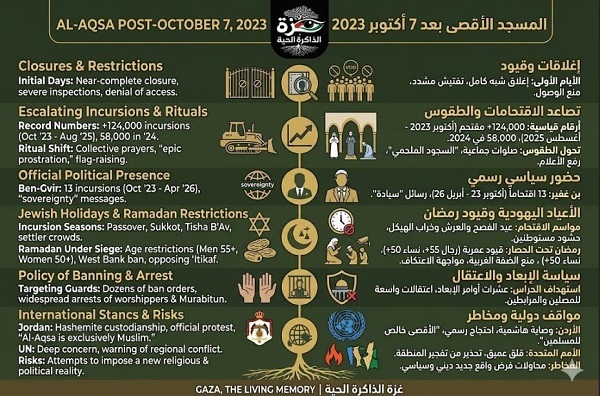
Al-Aqsa Mosque Since October 7, 2023: Closures, Raids, Ramadan Restrictions, and Attempts to Impose a New Reality in the Most Dangerous Phase the Holy Sanctuary Has Faced in Decades
Special Report | Gaza: The Living Memory Since October 7, 2023, Al-Aqsa Mosque has entered an unprecedented phase of escalation, coinciding with Israel's war on the Gaza Strip and the broader military escalation across the occupied Palestinian territories. Over the course of more than two years, Israeli measures at Al-Aqsa evolved from temporary security restrictions into a sustained policy characterized by repeated closures, severe limitations on Muslim worshippers, large-scale settler incursions, and the increasing presence of Israeli ministers and officials inside the mosque compound, most notably Israeli National Security Minister Itamar Ben-Gvir. Experts on Jerusalem affairs argue that the period following October 2023 represents one of the most dangerous phases for Al-Aqsa Mosque since Israel occupied East Jerusalem in 1967. The concern stems not only from the unprecedented number of settler incursions but also from growing efforts to normalize Jewish religious rituals inside the compound and expand restrictions on Muslim worshippers, particularly during the holy month of Ramadan. Al-Aqsa: Religious and Symbolic Significance Al-Aqsa Mosque occupies a unique position in Islam. It is the first qibla (direction of prayer), the third holiest site in Islam after Mecca and Medina, and the destination of the Prophet Muhammad’s Night Journey and Ascension (Isra and Mi'raj). The Al-Aqsa compound encompasses approximately 144 dunams (about 35 acres) within Jerusalem’s Old City, including Al-Qibli Mosque, the Dome of the Rock, prayer halls, courtyards, arcades, and historic structures. Jordan, through the Islamic Waqf, maintains custodianship over the holy site and regards the entire compound as an exclusively Muslim place of worship. Palestinian and Jordanian authorities have consistently rejected Israeli efforts to alter the historical and legal status quo governing the site. The First Days of the War: Near-Total Closure Immediately following the outbreak of war on October 7, 2023, Israeli authorities imposed unprecedented restrictions on Jerusalem and Al-Aqsa Mosque. Large numbers of Muslim worshippers were denied access to the mosque. Military checkpoints multiplied throughout the Old City, and most Palestinians from the occupied West Bank were prevented from entering Jerusalem. Even Palestinian residents of Jerusalem faced heightened restrictions and security checks. Jerusalem-based institutions described this period as one of the strictest closures imposed on Al-Aqsa in years, resulting in a dramatic decline in attendance compared to the pre-war period. A Surge in Settler Incursions While international attention focused primarily on Gaza, Al-Aqsa Mosque witnessed a sharp escalation in settler incursions. According to Palestinian monitoring organizations, the number of settlers entering the compound exceeded 124,000 between October 2023 and August 2025. The year 2024 alone recorded approximately 58,000 settlers, making it the highest annual figure since systematic documentation of incursions began. The first months of 2025 saw tens of thousands of additional incursions, further cementing the post-October 2023 period as the most intensive phase of settler activity in the modern history of Al-Aqsa Mosque. From Visits to Religious Rituals The incursions have not been limited to tours or visits. Palestinian institutions have documented a significant increase in the performance of Jewish religious rituals inside the mosque compound. These activities have included collective prayers, the recitation of religious texts, the raising of Israeli flags, and acts such as "epic prostration" performed by settler groups. The Islamic Waqf and Palestinian authorities view these practices as direct violations of the historical status quo governing the site. Researchers argue that the most significant shift is not merely the increase in the number of settlers entering the compound but the transformation of these incursions into attempts to establish a permanent Jewish religious presence within the sanctuary. Itamar Ben-Gvir: The Face of Al-Aqsa Incursions Since assuming office as Israel’s National Security Minister, Itamar Ben-Gvir has become the political figure most closely associated with incursions into Al-Aqsa Mosque. Since the outbreak of the war, Ben-Gvir has entered the compound at least 13 times, bringing his total number of visits since taking office in late 2022 to approximately 16 incursions. During several of these visits, Ben-Gvir was seen participating in Jewish prayers and religious rituals within the compound. His appearances sparked widespread condemnation from Palestinians, Jordan, Arab governments, and Islamic organizations. Palestinian officials view these visits as carrying political significance beyond their religious dimension, interpreting them as attempts to reinforce Israeli claims of sovereignty over the site. Jewish Holidays and Peak Incursion Seasons Jewish religious holidays have become periods of intensified activity at Al-Aqsa Mosque. During Passover, Sukkot, and commemorations associated with the destruction of the Jewish Temple, the compound has witnessed some of the largest settler gatherings in recent years. Israeli ministers, members of the Knesset, and prominent rabbis have participated in these events, which frequently include collective prayers, religious chants, and symbolic ceremonies inside the compound. Palestinians regard these occasions as flashpoints capable of triggering broader unrest in Jerusalem and beyond. Ramadan Under Restrictions Ramadan holds exceptional significance at Al-Aqsa Mosque. For decades, hundreds of thousands of Palestinians gathered at the site during Fridays, the last ten nights of Ramadan, and Laylat al-Qadr (the Night of Power). However, Ramadan during the war years unfolded under unprecedented restrictions. In both Ramadan 2024 and Ramadan 2025, Israeli authorities imposed severe limitations on access to Jerusalem for Palestinians from the West Bank. Entry was conditioned on age restrictions and special permits. During Ramadan 2025, only men above the age of 55 and women above the age of 50 were generally allowed entry under specific conditions, while all worshippers were subjected to extensive security checks. Military checkpoints surrounding Jerusalem and the Old City further restricted access for tens of thousands of Palestinians seeking to pray at Al-Aqsa. I'tikaf and Laylat al-Qadr I'tikaf—the practice of spiritual retreat during the final ten days of Ramadan—has long been one of the most important traditions associated with Al-Aqsa Mosque. During the war period, Jerusalem institutions documented repeated restrictions on worshippers seeking to observe I'tikaf. Security measures inside the compound intensified, while arrests and exclusion orders targeted worshippers, activists, guards, and employees of the Islamic Waqf. Despite these measures, large crowds continued to attend prayers during Ramadan, especially on Laylat al-Qadr, reflecting the profound religious and national significance of the mosque. Arrests and Exclusion Orders The escalation at Al-Aqsa was accompanied by an expansion of Israeli policies aimed at restricting Palestinian presence at the site. Dozens of exclusion orders were issued against mosque guards, Waqf employees, activists, and worshippers, preventing them from entering the compound for varying periods. Arrests at the gates of Al-Aqsa and throughout Jerusalem’s Old City also increased, often targeting Palestinians attempting to access the mosque. Human rights advocates argue that these policies are intended to weaken local Palestinian presence and limit documentation of Israeli actions at the site. Jordan: Al-Aqsa Belongs Exclusively to Muslims As custodian of Jerusalem’s Islamic and Christian holy sites, Jordan repeatedly condemned settler incursions and visits by Israeli officials. Jordan’s Ministry of Foreign Affairs consistently reaffirmed that the entire 144-dunam compound constitutes an exclusively Muslim place of worship and warned that any attempt to alter its legal and historical status violates international law. Jordan also lodged repeated diplomatic protests against visits by Ben-Gvir and other Israeli officials. Palestinian, Arab, and Islamic Condemnations The Palestinian Authority, the Islamic Waqf, Palestinian political factions, the Arab League, and the Organization of Islamic Cooperation have all repeatedly condemned developments at Al-Aqsa. These institutions argue that continued incursions constitute a provocation to Muslims worldwide and a violation of international law and established agreements governing the site. They have warned that any change to the status quo at Al-Aqsa carries consequences extending far beyond Palestine and could destabilize the broader region. The United Nations and International Responses The United Nations, the European Union, and numerous governments have expressed concern regarding rising tensions at Al-Aqsa Mosque. International bodies have repeatedly warned that any attempt to alter the status quo in the Holy Sanctuary could trigger wider instability in Jerusalem, the occupied Palestinian territories, and the region as a whole. However, Palestinian institutions maintain that international condemnations have failed to halt incursions or ease restrictions imposed on Muslim worshippers. The Most Significant Transformation in Decades Experts on Jerusalem increasingly argue that the most consequential development since October 2023 is not any single measure but the convergence of multiple trends: Record-breaking numbers of settler incursions. Increased performance of Jewish religious rituals inside the compound. Repeated visits by senior Israeli ministers. Expanded restrictions on Muslim worshippers. Increased use of arrests and exclusion orders. Efforts to establish a new religious and political reality within the sanctuary. Taken together, these developments represent a qualitative shift compared to previous years. Conclusion Since October 7, 2023, Al-Aqsa Mosque has become one of the central arenas of conflict in occupied Jerusalem. Between repeated closures, restrictions on worshippers, settler incursions exceeding 124,000 individuals, and the recurring visits of Itamar Ben-Gvir and other Israeli officials, the mosque has entered what many Palestinians describe as its most dangerous period in decades. As Muslims continue to regard Al-Aqsa as a sacred religious, historical, and national symbol, concerns are growing that ongoing Israeli policies may fundamentally alter the historical status quo that has governed the site for generations. Such changes would carry profound religious, political, and regional implications extending far beyond Jerusalem and Palestine, resonating throughout the Muslim world..