report

Press coverage and detailed reports on unfolding events
2026-10-06

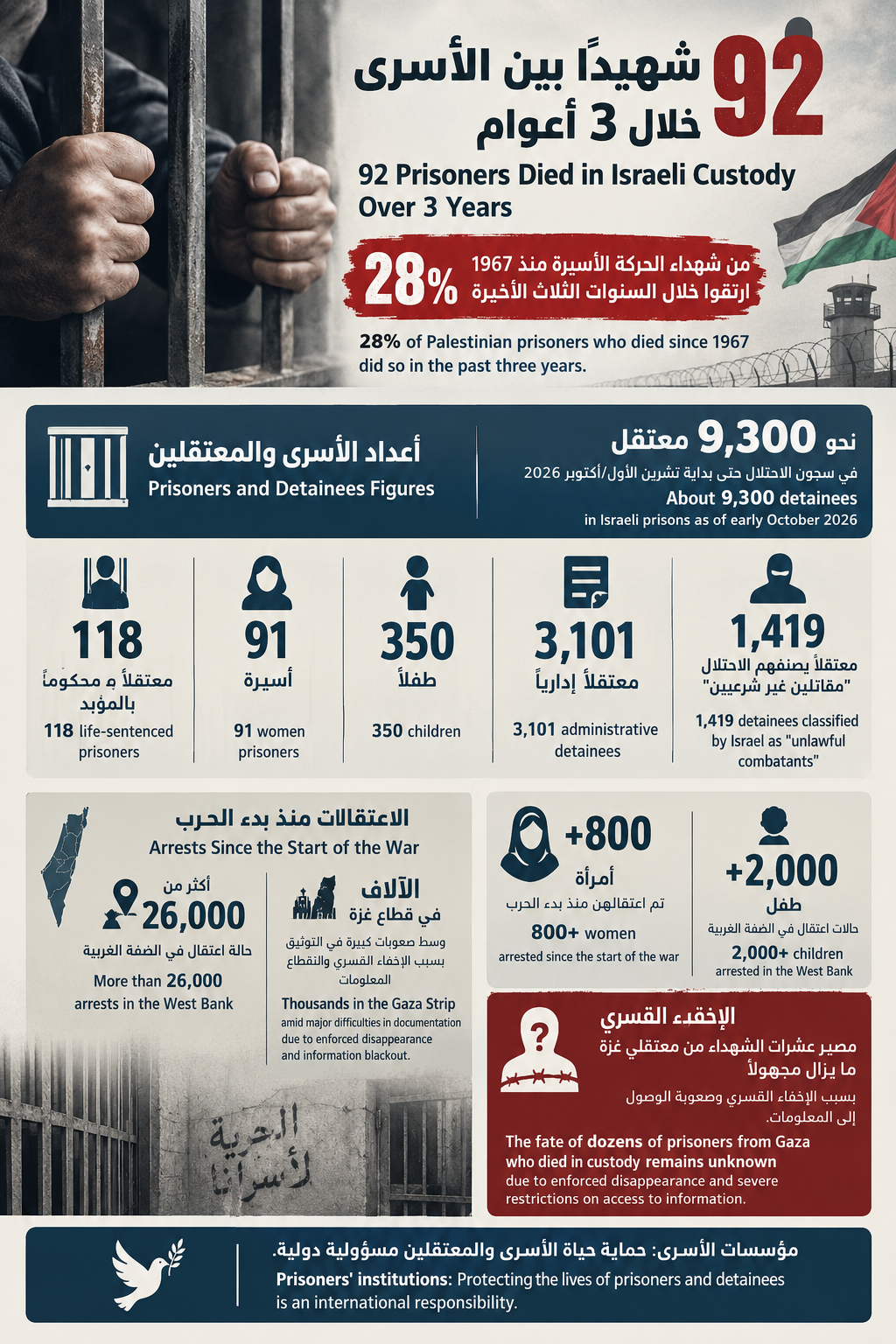
Prisoners' institutions: 92 martyrs among prisoners within three years.. and enforced disappearance hides the fate of dozens of martyrs from Gaza detainees

28% of the Captive Movement's Martyrs Since 1967 Have Died Within the Last Three Years
Ramallah, 6-10-2026 – During a press conference and a support rally for prisoners held today, Tuesday, in the city of Al-Bireh, prisoners' institutions stated that 92 prisoners whose identities are known have died as martyrs within three years, while enforced disappearance hides the fate of dozens of martyred detainees from Gaza.
The institutions pointed out that approximately 28% of the total martyrs of the captive movement since 1967 have died during the past three years.
They further detailed that about 9,300 detainees are held in occupation prisons as of the beginning of this October. This includes:
  • 118 prisoners serving life sentences.
  • 91 female prisoners.
  • 350 children.
  • 3,101 administrative detainees.
  • 1,419 detainees classified by the occupation as "unlawful combatants," including detainees from Syria and Lebanon.
The organizations confirmed that 26,000 arrest cases have been recorded in the West Bank, along with thousands in Gaza, since the beginning of the genocide. They added that 49% of the prisoners in the occupation's jails are held without "charges" or "trials." [1]
Since the beginning of the crime of genocide, the Israeli occupation has escalated its policy of arrest and persecution, turning it into a tool for collective revenge, subjugation, and the targeting of various segments of Palestinian society.
According to available data, more than 26,000 arrest cases were recorded in the West Bank, including occupied Jerusalem, while the number of arrests in the Gaza Strip is estimated in the thousands. Documenting these cases remains highly difficult due to ongoing military operations, information blackouts, and enforced disappearances.
The arrests have targeted women, children, the elderly, the sick, journalists, and human rights workers. The number of detained women has exceeded 800, while child arrest cases in the West Bank have surpassed 2,000 since the start of the genocide.
The impact of arrest extends beyond detention itself to include raids, searches, vandalism, threats, and mistreatment. It also carries psychological, social, and economic consequences for the detainees and their families. According to human rights organizations, this makes detention a continuous tool for pressure and collective subjugation.
Speakers called for intensifying international pressure on the occupation to halt and abolish the use of the death penalty, and to ensure that the military or civil judiciary is not used as a tool to impose this sentence on a discriminatory basis.
They also emphasized that protecting the lives of Palestinian prisoners and detainees is an international responsibility that must not be treated as an internal matter or left hostage to retaliatory policies.


.

2026-10-04

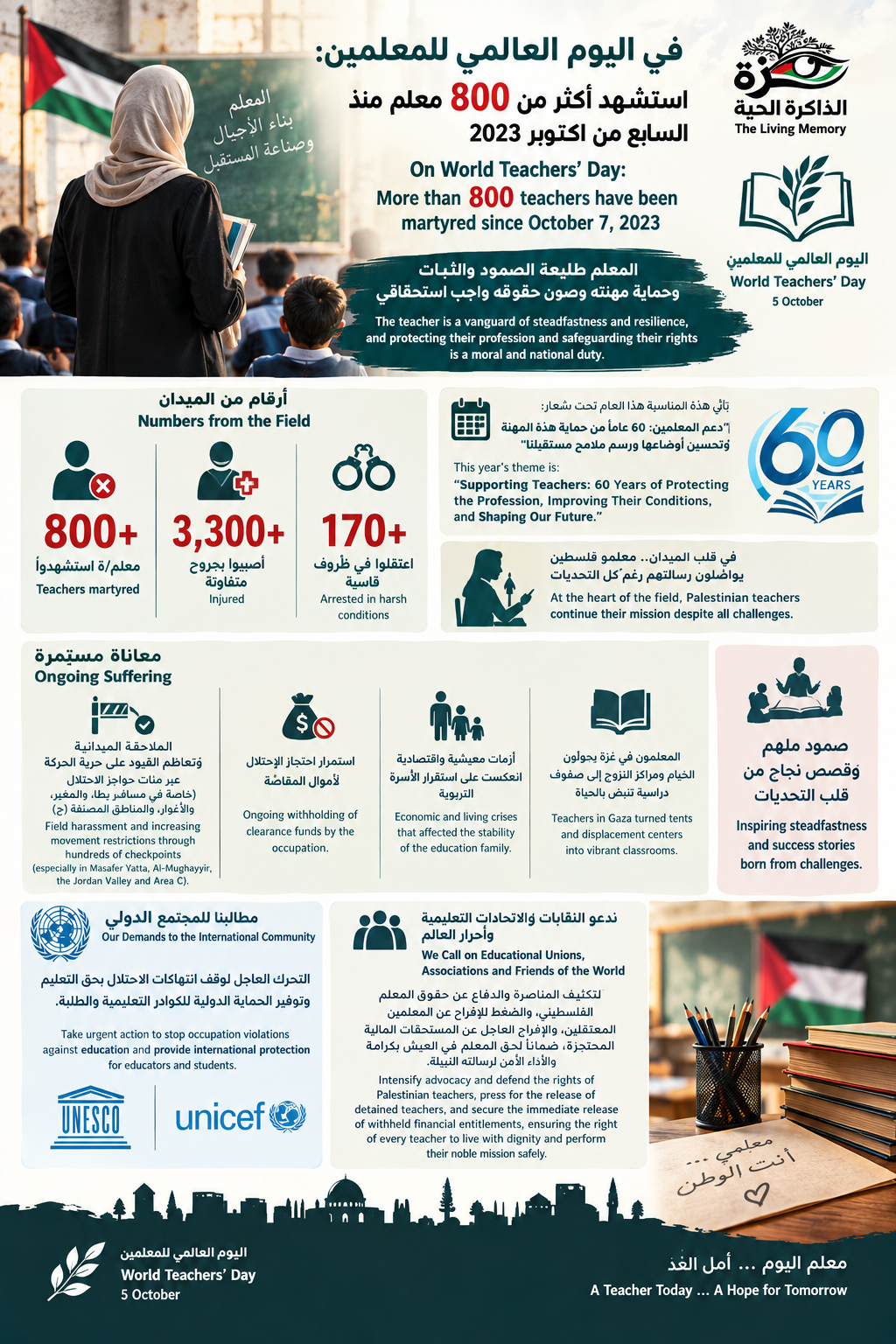
On World Teachers' Day: More than 800 teachers have been martyred since October 7, 2023
- The Teacher is the Vanguard of Steadfastness and Resilience; Protecting Their Profession and Safeguarding Their Rights is an Entitled Duty
RAMALLAH, October 4, 2026 (WAFA) — The Ministry of Education and Higher Education stated that since the beginning of the war of genocide on October 7, 2023, more than 800 male and female teachers have been martyred, over 3,300 others have been injured with varying degrees of wounds, and more than 170 teachers have been detained under harsh conditions.
In a statement issued today, Sunday, to mark World Teachers' Day, the Ministry added that this year's global occasion is held under the slogan: "Supporting Teachers: 60 Years of Protecting the Profession, Improving Conditions, and Shaping Our Future." This carries a historical symbolism that embodies sixty years of human struggle to protect the teaching profession and advance the status of its educators.
The statement continued: "While the world evokes this slogan to address the challenges and strategies necessary to elevate the educational mission, the Palestinian teacher stands at the heart of the field. They embody the finest examples of steadfastness and loyalty to their mission, fighting a genuine battle for survival to protect the right to education under the most brutal conditions of aggression and systematic targeting."
The Ministry highlighted that the suffering of teachers intensifies daily due to on-the-ground harassment and growing restrictions on freedom of movement across hundreds of military checkpoints. This is particularly severe in Masafer Yatta, Al-Mughayyir, the Jordan Valley, and Area C. This is further compounded by the occupation's continued withholding of Palestinian tax revenues (clearance funds), resulting in severe living and economic crises that directly and painfully affect the financial and psychological stability of the educational community.
Expressing deep pride in the pioneering role played by teachers across the homeland, the Ministry stated: "This is an occasion to extend gratitude and appreciation to our male and female teachers. We honor the teachers of Gaza, who were not deterred by rubble, bombardment, or displacement camps from performing their duty. They successfully transformed tents and displacement centers into classrooms pulsing with life. We also honor their colleagues in the virtual schools in the West Bank who skillfully continued their journey to ensure the continuity of education for our students in Gaza, as well as the teachers of Jerusalem who remain steadfast in their schools despite racist occupation policies."
The statement emphasized that this resilience has yielded inspiring success stories, transforming challenges into opportunities for renewal and creativity. The Palestinian teacher has proven to be a true community leader by innovating educational initiatives, technological solutions, and alternative teaching methods from within the heart of the blockade. This sends a clear message from Palestine to the entire world: the will to learn and teach is far stronger and more enduring than the machinery of war and destruction.
The Ministry of Education and Higher Education demanded that the international community, the United Nations, and educational, human rights, and humanitarian organizations—led by UNESCO and UNICEF—take urgent action to curb the ongoing occupation violations against the educational sector and work immediately to provide international protection for educational staff and students.
Furthermore, the Ministry called upon all educational federations, unions, and free people of the world to intensify their advocacy and defense of the rights of Palestinian teachers. It urged them to exert pressure for the release of detained teachers and the immediate release of withheld financial revenues, ensuring the teacher's right to live in dignity and safely fulfill their noble mission.


.

2026-10-05

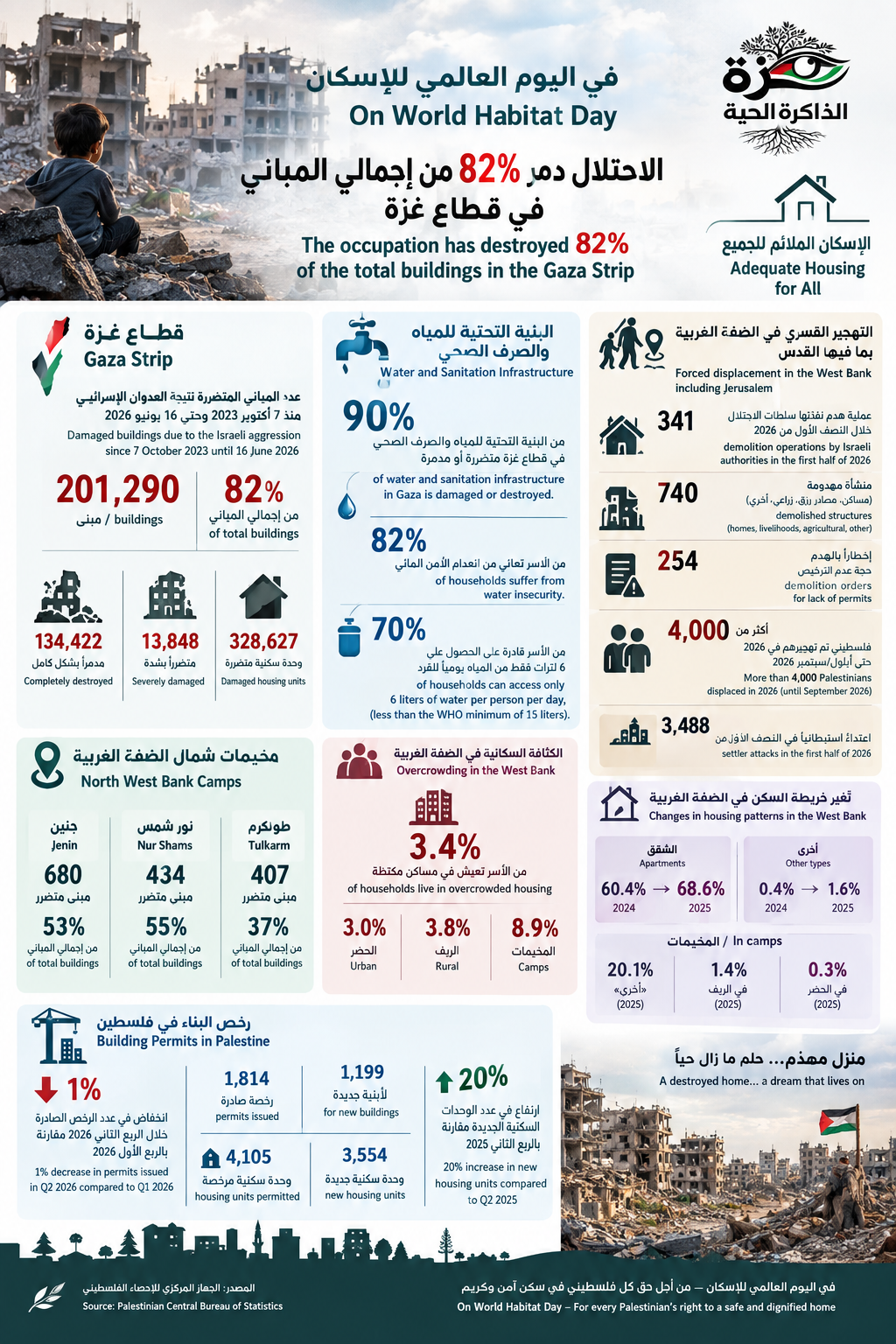
On World Habitat Day: The occupation has destroyed 82% of all buildings in the Gaza Strip

- 90% of the water and sanitation infrastructure in the Gaza Strip is damaged or destroyed
- Forced displacement escalates, targeting the Palestinian presence in the West Bank, including Jerusalem
- Aggression on Jenin and Tulkarm camps forcibly displaces 40,000 citizens
RAMALLAH — The Palestinian Central Bureau of Statistics (PCBS) announced that the number of buildings damaged due to the ongoing Israeli occupation aggression on the Gaza Strip from October 7, 2023, until June 16, 2026, reached approximately 201,290 buildings. This represents an estimated 82% of all buildings in the Strip. Among these, 134,422 buildings were completely destroyed, 13,848 buildings were severely damaged, and the number of damaged housing units reached about 328,627.
This documentation was released in a statement issued by the PCBS today, Monday, to mark World Habitat Day—established by the United Nations Human Settlements Programme (UN-Habitat)—as well as Arab Housing Day, designated by the Council of Arab Ministers of Housing and Reconstruction.
World Habitat Day 2026 is held under the slogan "Adequate Housing for All" amid an escalating global housing crisis. UN-Habitat indicates that approximately 2.8 billion people worldwide face various forms of inadequate housing, including 1.1 billion people living in slums and informal settlements.
In the Palestinian context, this day holds exceptional significance. The Palestinian people face widespread destruction of homes and infrastructure in the Gaza Strip, continuous displacement, forced evictions, and house demolitions in the West Bank, including Jerusalem. This is coupled with economic, social, and environmental challenges that severely limit families' access to adequate housing and basic services.
In the West Bank, northern governorates have suffered extensive destruction. In the Jenin camp, the total number of damaged buildings reached 680, representing about 53% of its total buildings. Meanwhile, damaged buildings in the Noor Shams camp reached 434 (55% of total buildings), and 407 buildings were damaged in the Tulkarm camp (about 37% of total buildings), according to data extending up to February 2026.

Escalation of Forced Displacement and Targeting Palestinian Presence in the West Bank and Jerusalem

The housing crisis and destruction are not confined to the Gaza Strip. Throughout 2026, forced displacement, land confiscation, and the targeting of Palestinian homes and facilities continued across the West Bank, including the Jerusalem Governorate.
According to data from the Colonization and Wall Resistance Commission, Israeli occupation authorities carried out approximately 341 demolitions during the first half of 2026. This resulted in the destruction of 740 Palestinian structures (including inhabited and uninhabited homes, livelihoods, agricultural facilities, and others). Furthermore, 254 demolition notices were issued under the pretext of lacking permits, concentrated primarily in the governorates of Hebron (102 notices), Bethlehem (70 notices), and Jerusalem (34 notices).
Demolitions were accompanied by a sharp increase in settler attacks, totaling 3,488 assaults during the first half of 2026, targeting Palestinian communities, property, lands, and livelihoods. The total number of Palestinians displaced in the West Bank due to demolitions, evictions, settler attacks, and related restrictions exceeded 4,000 individuals between the start of 2026 and September 2026, according to reports by the United Nations Office for the Coordination of Humanitarian Affairs (OCHA). These developments reflect the widening scope of pressure imposed on Palestinian communities, undermining housing stability, the ability to remain on their lands, and access to basic services.

Repeated Displacement and Shrinking Living Space in the Gaza Strip

Since October 7, 2023, large-scale military operations and the destruction of homes and infrastructure have led to repeated, mass displacement of the population in the Gaza Strip. Most of the Strip's 2.1 million residents remain displaced. Due to access restrictions across vast areas, residents are now confined to less than 40% of the Gaza Strip's total area, causing extreme overcrowding and immense pressure on the remaining refuge zones.

3.4% of West Bank Households Live in Overcrowded Conditions

About 3.4% of households in the West Bank reside in high-density housing units (defined as 3 or more people per room). By community type, this rate stands at 3.0% in urban areas, 3.8% in rural areas, and jumps significantly to 8.9% within refugee camps as of 2025.

Changing Housing Trends in the West Bank: Apartments Lead while Non-Traditional Housing Expands in Camps

A notable shift occurred in the distribution of West Bank households by housing type between 2024 and 2025. The percentage of families living in apartments rose from 60.4% in 2024 to 68.6% in 2025. Additionally, families living in housing classified as "other" increased from 0.4% to 1.6% over the same period.
This shift is most pronounced in refugee camps, where households living in "other" types of housing reached 20.1% in 2025, compared to just 1.4% in rural areas and 0.3% in urban areas. This spike is particularly evident in the Tulkarm and Jenin governorates, reflecting the stark changes in housing conditions forced upon families due to demolitions and displacement.

90% of Water and Sanitation Infrastructure in Gaza Damaged or Destroyed: A Deepening Crisis

Data from the first half of 2026 shows that approximately 90% of the water and sanitation infrastructure in the Gaza Strip has been damaged or destroyed. This has severely crippled access to safe and regular water services.
Furthermore, 82% of households suffer from water insecurity. Up to 70% of families in the Gaza Strip are only able to access 6 liters of water per person per day—far below the minimum standard of 15 liters per person per day recommended by the World Health Organization (WHO).

Decline in Issued Building Permits in Q2 2026 Compared to Q1 2026
Reflecting the widespread destruction in Gaza and construction challenges in the West Bank, building permit data illustrates the level of licensed urban activity.
The number of building permits issued in Palestine during the second quarter of 2026 decreased by 1% compared to the first quarter of 2026. A total of 1,814 building permits were issued during Q2 2026, including 1,199 for new buildings. The number of licensed housing units reached 4,105 units, of which 3,554 were new residential units. However, the number of newly licensed housing units marked a 20% increase compared to the second quarter of 2025.


.

2026-09-29

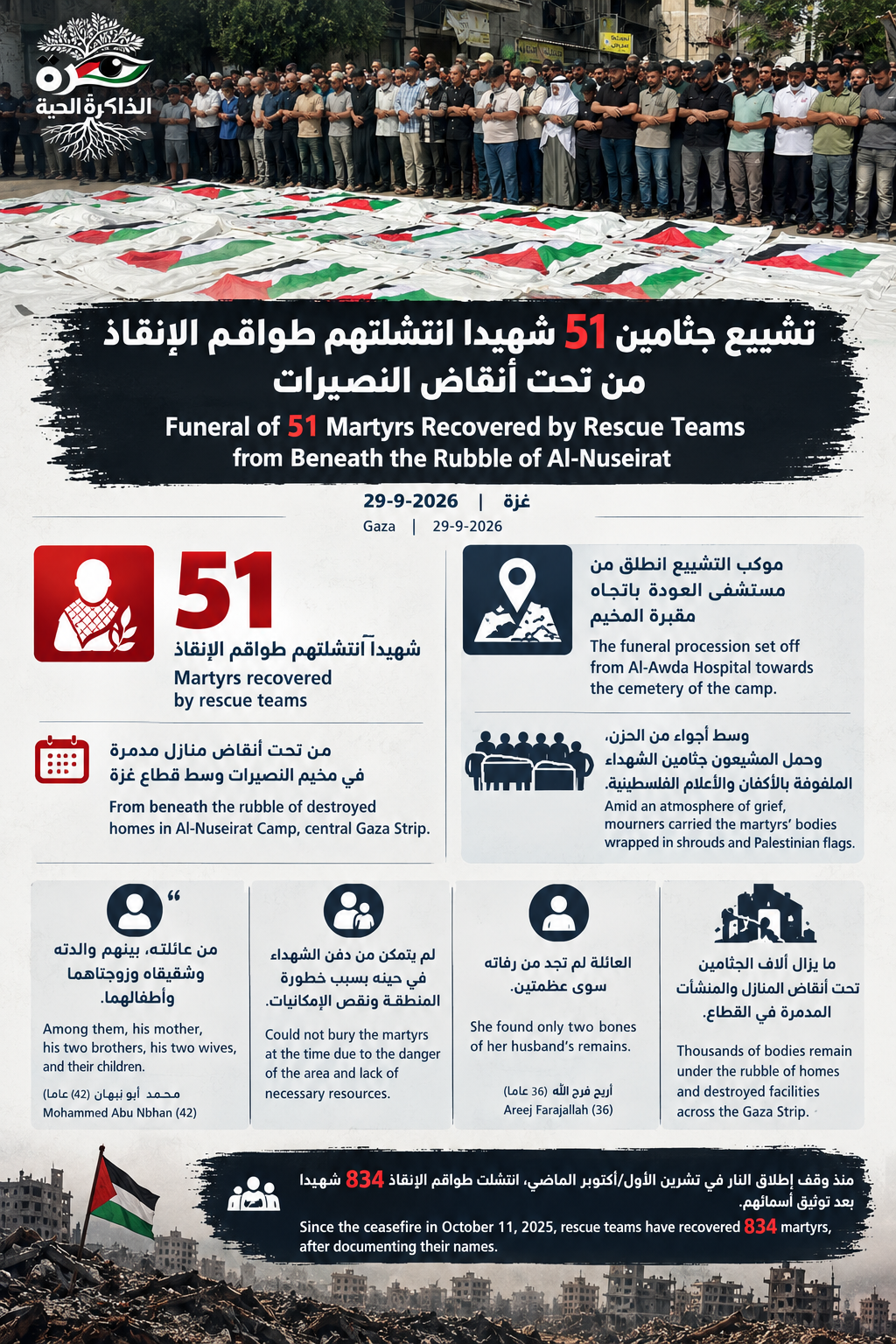
Funeral of 51 Martyrs Recovered by Rescue Teams from Under the Rubble in Al-Nuseirat
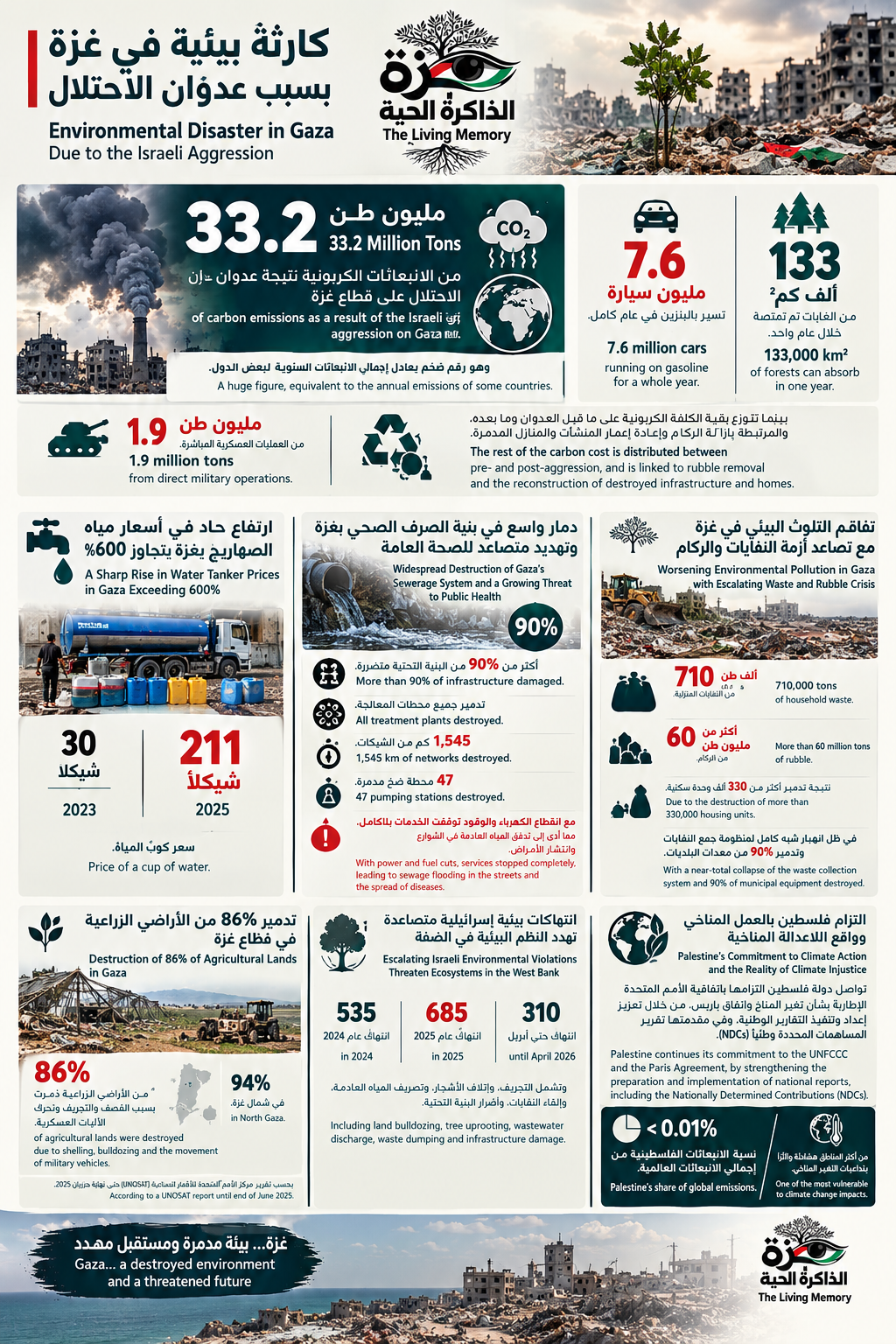
GAZA, September 29, 2026 – Thousands of citizens took part on Tuesday in the funeral of 51 martyrs whose bodies were recently recovered by rescue teams from under the rubble of destroyed homes in the Al-Nuseirat refugee camp in the central Gaza Strip.
The funeral procession set off from Al-Awda Hospital toward the camp’s cemetery amid an atmosphere of deep sorrow, as mourners carried the bodies wrapped in shrouds and Palestinian flags.
Mohammed Abu Nabhan, 42, told a WAFA correspondent that he was bidding farewell to 13 martyrs from his family, including his mother, his two brothers, their wives, and their children. They were killed in an Israeli airstrike that destroyed the family home on July 29, 2025.
He explained that the family had previously fled the area before returning home. He noted that the occupation forces had besieged the New Camp area at that time and destroyed their home along with others, preventing residents from reaching the victims to recover them.
He added that the family was unable to bury the martyrs at the time due to the dangerous conditions in the area and the lack of necessary equipment for recovery operations.
Areej Farajallah, 36, said she was bidding farewell today to her husband, Samir, who was martyred on November 28, 2024. She mentioned that she only found two bones of his remains, describing it as "better than nothing."
The remains of the martyrs buried today belong to children, women, and men from several families, including Nabhan, Al-Safeen, Al-Thawabta, Al-Tawil, Farajallah, and Hajjaj, who lost their lives in Israeli airstrikes on various parts of the camp.
According to medical sources, rescue teams have recovered 834 martyrs since the ceasefire last October, after documenting their names.
Thousands of bodies remain under the rubble of destroyed homes and facilities across the Gaza Strip due to the difficulty of recovery operations, shortages of equipment and fuel, and rescue teams being blocked from accessing certain areas.
Last month, the Abu Shariah and Al-Hasayna families recovered the remains of 112 martyrs and buried them in a single funeral in Gaza City. Meanwhile, the city's residents are scheduled to bury the bodies of 105 martyrs tomorrow, Wednesday.


.

2026-09-14

"An environmental disaster in Gaza due to the occupation's aggression: 33.2 million tons of carbon emissions."

"Ramallah - Carbon emissions resulting from the Israeli occupation's aggression on the Gaza Strip reached 33.2 million tons of CO2 equivalent—a massive figure equal to the total annual emissions of some entire countries.
The Palestinian Central Bureau of Statistics (PCBS) explained that these emissions are equivalent to what about 7.6 million gasoline-powered cars produce in a whole year, and what forests spanning an area of 133,000 square kilometers can absorb of carbon dioxide within a single year.
The PCBS pointed out that this catastrophic cost is distributed between direct military operations, which caused the emission of about 1.9 million tons, and the pre- and post-aggression carbon costs linked to debris removal and the reconstruction of destroyed facilities and homes.

Sharp Rise in Water Tanker Prices in Gaza Exceeds 600%

The destruction of water networks in the Gaza Strip led to a sharp rise in water prices, particularly those distributed by tankers, as the price of a cubic meter of water rose to about 211 shekels in 2025 compared to 30 shekels in 2023, reflecting the worsening water crisis and the economic burden on citizens.

Widespread Destruction in Gaza's Wastewater Infrastructure and a Rising Threat to Public Health

The Gaza Strip is also witnessing an almost complete collapse of the sanitation system as a result of damage to more than 90% of the infrastructure and the destruction of all treatment plants, in addition to widespread destruction of networks (about 1,545 km) and 47 pumping stations. With the continuous power and fuel outages, services have stopped completely, leading to the flow of wastewater into the streets, rising environmental and health risks, and the spread of diseases.

Worsening Environmental Pollution in Gaza with the Escalation of the Waste and Debris Crisis

The Gaza Strip suffers from severe environmental degradation due to the accumulation of about 710,000 tons of domestic waste and more than 60 million tons of rubble resulting from the destruction of over 330,000 housing units. This comes amid an almost complete collapse of the waste collection system and the destruction of 90% of municipal equipment, which has led to the spread of pollution and diseases, worsening the environmental crisis and complicating recovery efforts.

Destruction of 86% of Agricultural Land in the Gaza Strip

A recent report by the United Nations Satellite Centre (UNOSAT) up to the end of June 2025 showed that the Israeli aggression caused widespread destruction to the agricultural sector in Gaza, as about 86% of agricultural land was destroyed due to bombardment, bulldozing, and the movement of military vehicles. Higher levels of destruction were recorded in some areas, with the destruction rate rising to 94% in northern Gaza. This rapid and continuous collapse of the agricultural sector reflects a direct and serious threat to the food security of more than two million people in the Strip.

Escalating Israeli Environmental Violations Threaten Ecosystems in the West Bank
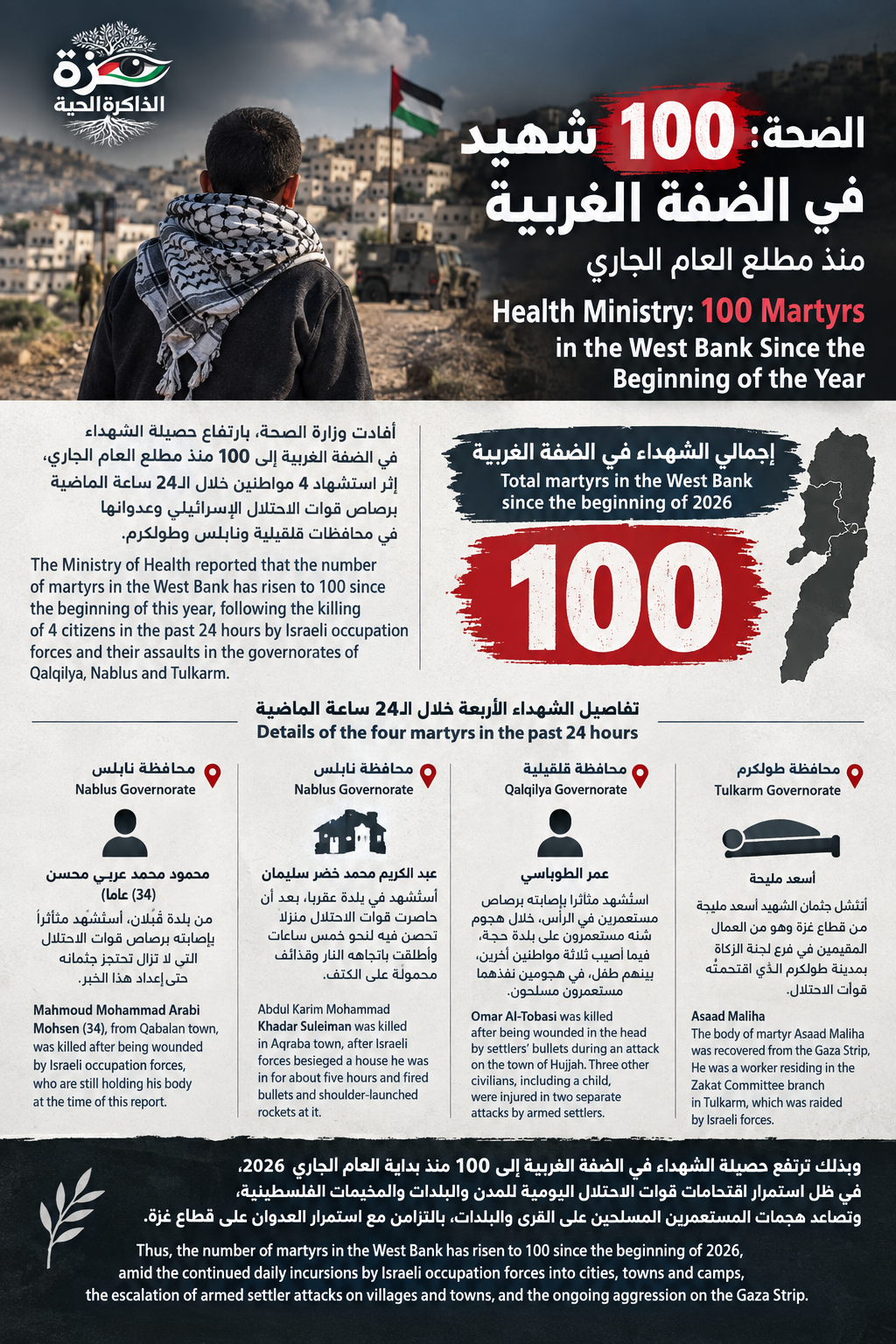
The year 2025 witnessed a noticeable escalation in Israeli environmental violations in the West Bank, where 685 violations were recorded compared to 535 violations in 2024, and 310 violations were recorded until the end of April 2026. This reflects escalating attacks on the Palestinian environment. These violations varied between bulldozing agricultural land, destroying trees, discharging wastewater, and dumping waste, in addition to infrastructure damage, leading to increasing degradation of ecosystems and threatening the sustainability of natural resources.
The State of Palestine continues its commitment to the United Nations Framework Convention on Climate Change (UNFCCC) and the Paris Agreement by strengthening the preparation and implementation of national reports—foremost among them the Nationally Determined Contributions (NDCs) report—as a key tool for guiding climate action, enhancing adaptation, supporting national policies, and attracting green investments.
Despite the worsening environmental and climate challenges, Palestine's contribution to global greenhouse gas emissions remains extremely limited, with national Palestinian emissions estimated at less than 0.01% of total global emissions—a negligible percentage compared to major industrial countries. Nevertheless, Palestine is considered one of the most vulnerable regions affected by the repercussions of climate change. This reality reflects a state of 'climate injustice,' where Palestine bears the impacts of a global climate crisis despite its very minor contribution to causing it."
.

2026-09-08

Health Ministry: 100 Palestinians killed in the West Bank since the beginning of the year
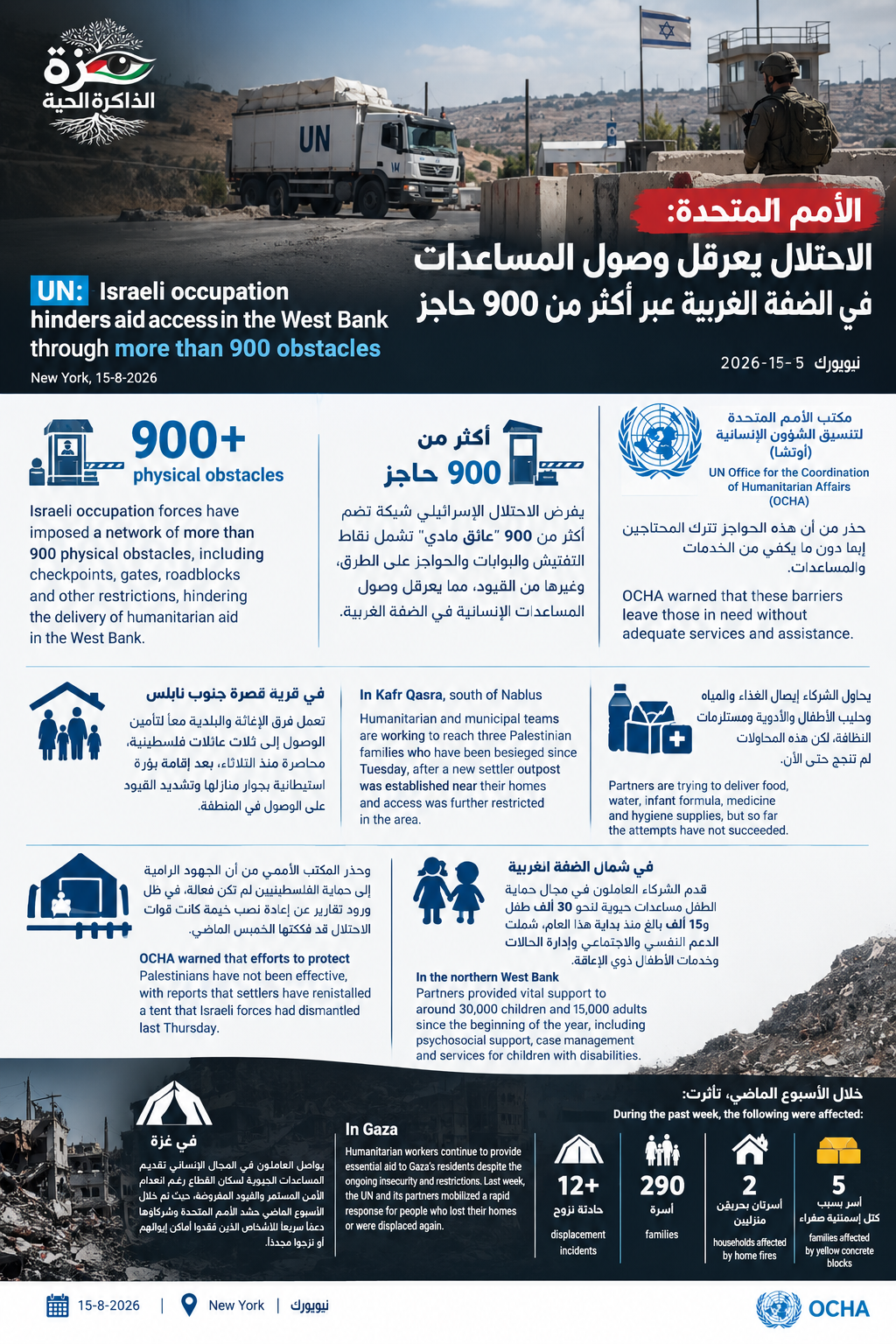
Ramallah—The Ministry of Health reported that the death toll in the West Bank has risen to 100 since the beginning of this year, following the deaths of 4 citizens over the past 24 hours by Israeli occupation forces' gunfire and aggression in the governorates of Qalqilya, Nablus, and Tulkarm.
The Ministry stated in a brief press release on Tuesday that four citizens were killed during the past 24 hours in the Nablus, Qalqilya, and Tulkarm governorates.
In the Nablus Governorate, Mahmoud Muhammad Arabi Muhsen (34 years old) from the town of Qabalan died from injuries sustained from occupation forces' gunfire. The forces continue to withhold his body as of the time of this report.
Additionally, young man Abdul Karim Muhammad Khader Suleiman was killed in the town of Aqraba, after occupation forces besieged a house he was inside for about five hours, firing live ammunition and shoulder-fired missiles at it.
In the Qalqilya Governorate, young man Omar Al-Tobasi died from a gunshot wound to the head sustained during an attack by settlers on the town of Hajja. Three other citizens, including a child, were injured in two separate attacks carried out by armed settlers.
In the Tulkarm Governorate, Civil Defense crews recovered the body of As'ad Mleiha, a worker originally from the Gaza Strip who was staying at the Zakat Committee branch in Tulkarm city, which was raided by occupation forces.
With these latest casualties, the death toll in the West Bank rises to 100 since the beginning of the current year, 2026, amid ongoing daily raids by occupation forces into Palestinian cities, towns, and camps, and escalating attacks by armed settlers on villages and towns, coinciding with the continuous aggression on the Gaza Strip.


.

2026-09-07

"UN: Over 900 checkpoints block aid access in the West Bank, UN says
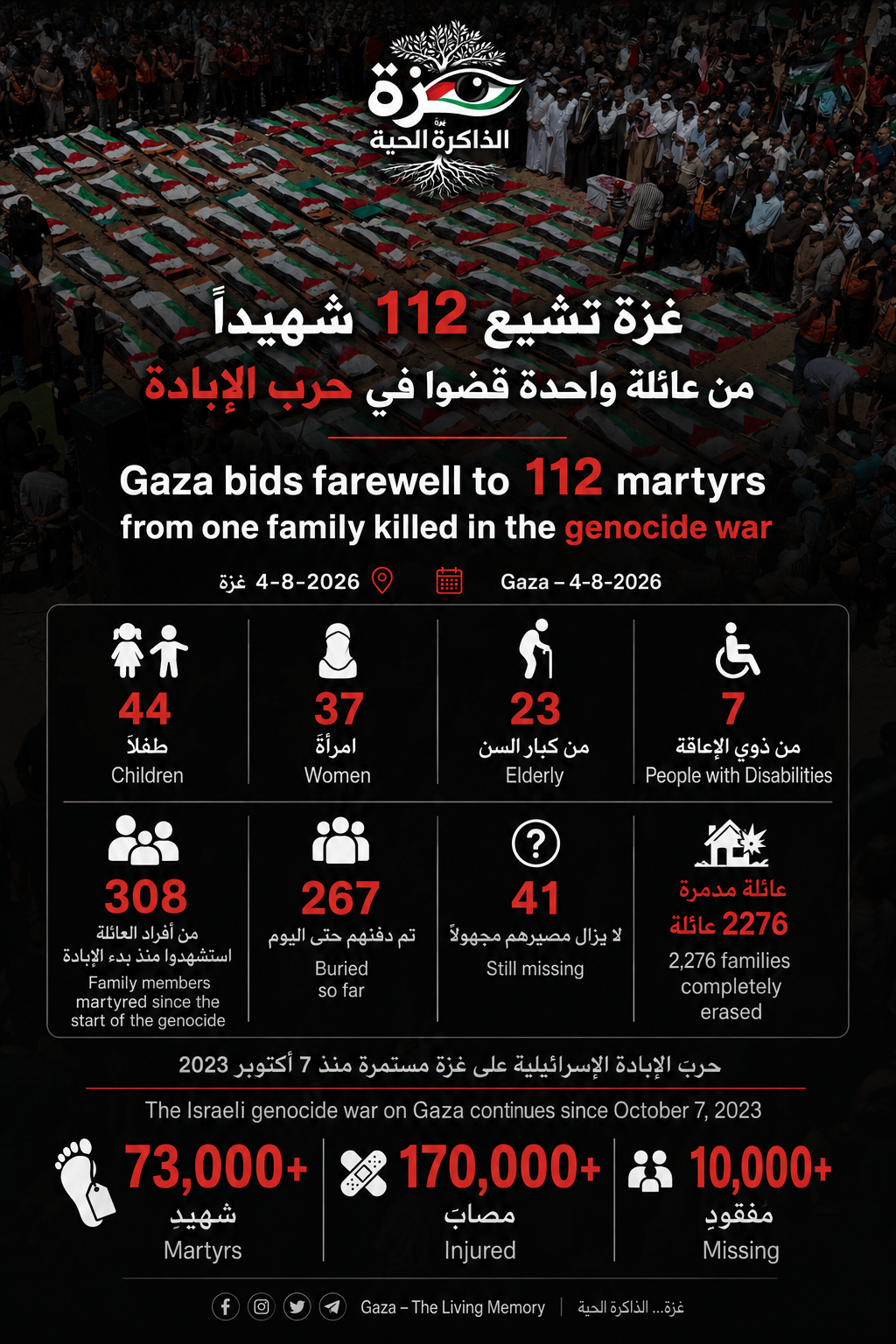
New York, Aug. 15, 2026 – UN humanitarian partners have warned that relief work in the West Bank is facing delays and restrictions due to a network of more than 900 "physical obstacles" imposed by the Israeli occupation, including checkpoints, gates, roadblocks, and other restrictions.
The United Nations Office for the Coordination of Humanitarian Affairs (OCHA) explained in a statement that these barriers obstruct the delivery of humanitarian aid, leaving those in need without adequate services and assistance.
It added that aid and municipal workers are struggling to secure access to three Palestinian families in the village of Qusra, south of Nablus. "These families have been trapped there since Tuesday, following the establishment of a settlement outpost next to their homes and the tightening of access restrictions in the area."
It continued, "In cooperation with municipal workers, UN partners are trying to deliver food, water, infant formula, medicine, and hygiene supplies to the people trapped inside, but these attempts have not succeeded so far."
The UN office warned that efforts to protect Palestinians have been ineffective, amid reports that settlers have re-erected a tent that Israeli occupation forces had dismantled last Thursday.
In the northern West Bank, OCHA explained that humanitarian conditions remain extremely difficult. Child protection partners have provided vital assistance, including psychosocial support, case management, and services for children with disabilities, to approximately 30,000 children and 15,000 adults since the beginning of this year.
In Gaza, OCHA indicated that humanitarian workers continue to deliver vital aid to the Strip's population despite continuous insecurity and imposed restrictions. It noted that over the past week, the UN and its partners mobilized rapid support for people who lost their shelters or were displaced again due to attacks, house fires, and other incidents.
It added that in more than 12 reported incidents, people were displaced and lost their property as a result of occupation attacks, affecting about 290 families. Additionally, two families were affected by house fires, which are often linked to unsafe cooking inside shelters in the absence of proper power sources.
It further noted that five other families were affected by the placement of new yellow concrete blocks, a measure that often leads to the displacement of residents in Gaza, as it indicates the expansion of areas where the occupation enforces access restrictions.


.

2026-08-04

Gaza bids farewell to 112 martyrs from a single family killed in the genocide war


 Gaza, August 4, 2026 – Thousands of citizens in Gaza City on Tuesday buried the bodies of 112 martyrs from the Abu Sharia al‑Hasayneh family, after they were recovered from under the rubble of homes bombed by Israeli forces during the ongoing genocide war on the Gaza Strip.

The coffins, draped in Palestinian flags, included children, women, men, and the elderly. They were lined up among the destroyed homes and buildings in the al‑Sabra neighborhood before the funeral procession moved to Sheikh Shaban cemetery in the city center. The scene was overwhelmed with grief as children scattered flowers over the shrouds and families bid farewell to their loved ones in tears.

Yousef Abu Sharia stated that Israeli forces had killed 308 members of the family since the start of the genocide war, noting that the bodies buried today included infants, mothers, fathers, youth, and the elderly, stressing that “Israeli missiles spared no one.”

Dr. Jidou Abu Sharia, representing the family, described the funeral as “the largest in modern Palestinian history.” Ali Abu Sharia, a family elder, explained that among the martyrs were 44 children, 37 women, 23 elderly people, and 7 persons with disabilities.

He pointed out that the family had been subjected to a series of airstrikes since the beginning of the assault, starting on October 20, 2023, when a five‑story house was bombed, killing 14 family members. The deadliest attack occurred on November 22, 2023, when Israeli forces targeted a residential block in al‑Sabra sheltering about 300 family members, killing dozens instantly. Seventy were buried at that time, while others remained under the rubble until their bodies were recently recovered.

Further strikes followed, including the bombing of Abu Salem Abu Sharia’s building in May 2024, which killed 15 people, and an attack on family members attempting to flee Gaza City in August 2025, which killed eight, including children.

Among the martyrs were businessmen such as Ibrahim al‑Hasayneh, owner of a construction company and several buildings, and Ismail al‑Hasayneh, owner of exchange shops and a real estate company, in addition to employees, civilians, and holders of foreign nationalities. Their deaths underscored that the assault targeted civilians of all backgrounds.

The family has buried 267 martyrs so far, while the fate of 41 remains unknown, likely still under the rubble or lost due to the intensity of the bombardment.

Medical sources reported that Israeli forces have completely annihilated 2,276 Palestinian families during the genocide war, killing 8,858 people with no survivors, and wiped out another 2,348 families leaving only one survivor each.

Thousands of citizens and representatives of other Palestinian families who lost large numbers of relatives during the assault joined the funeral, including the Daghmash, Abu Hasira, al‑Ghoul, al‑Madhoun, Abu al‑Qumsan, Salem, Abu Nasr, al‑Batsh, Abu Shammala, al‑Astal, and al‑Farra families.

Abdul Rahman Abu Hasira, one of the mourners, said his family lost about 500 members in various strikes on residential blocks in Gaza City. He himself survived an airstrike on November 4, 2023, that killed his parents and four siblings among 45 martyrs from the family.

According to medical sources, the genocide war waged by Israeli forces on Gaza since October 7, 2023 has killed more than 73,000 Palestinians, in addition to tens of thousands of wounded and missing, amid ongoing bombardment, starvation, and widespread destruction.

.

2026-08-02

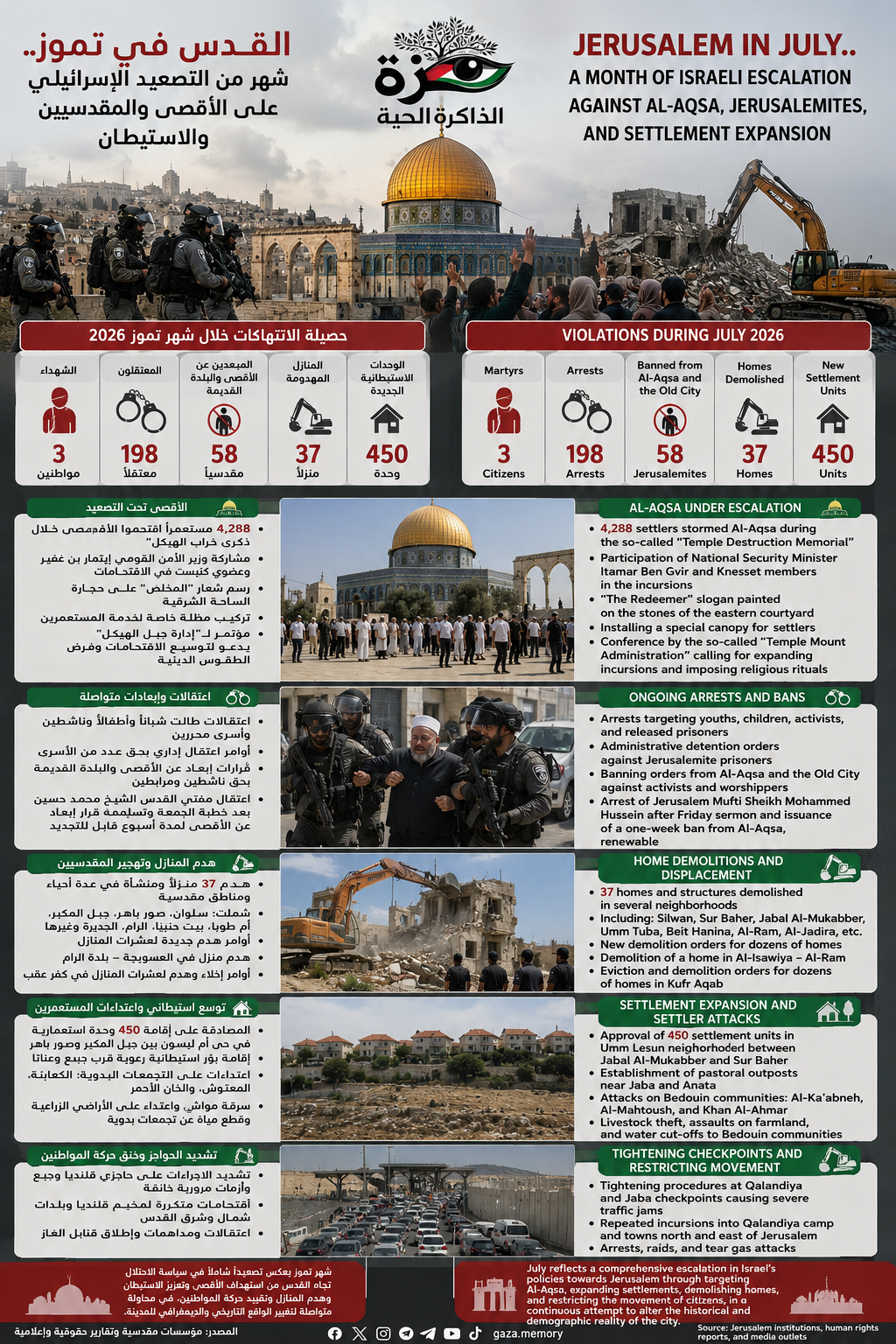
Jerusalem in July: A Month of Israeli Escalation Against Al-Aqsa, Jerusalemites, and Settlement Expansion

Occupied Jerusalem – Al-Hayat Al-Jadida

During July, occupied Jerusalem experienced a broad Israeli escalation that affected various aspects of Palestinian life, focusing particularly on Al-Aqsa Mosque, Jerusalem neighborhoods, and Bedouin communities surrounding the city. This occurred through intensified raids, heightened military measures, and stricter restrictions on residents, along with the continuation of home demolitions, arrests, deportations, and settlement expansion.

During the month, three citizens from the Jerusalem Governorate were killed, while daily arrest campaigns and raids continued across various towns and neighborhoods. This coincided with the ongoing targeting of Al-Aqsa guards, murabiteen (faith defenders/activists), activists, and journalists through deportation orders and bans from entering the mosque and the Old City.

Al-Aqsa Under Escalation

Al-Aqsa Mosque was at the forefront of occupation targets during July, enduring daily raids under the protection of Israeli police. These coincided with calls from "Temple groups" to conduct large-scale incursions during the so-called "destruction of the Temple" anniversary.

The number of settlers who stormed the courtyards of Al-Aqsa Mosque during this occasion reached approximately 4,288 settlers, amid a heavy deployment of occupation forces that transformed the mosque's surroundings and entrances into a closed military zone. The raids included the participation of Israeli National Security Minister Itamar Ben-Gvir and Knesset members Amit Halevi and Nissim Vaturi.

The mosque witnessed unprecedented violations during the month, most notably:

  • Settlers painting the "Savior" symbol on stones in the eastern courtyard of Al-Aqsa.

  • Constructing a special canopy to serve settlers during raids—a step considered an attempt to impose new facts on the ground within its courtyards, particularly in the eastern area.

Ministers and Knesset members from the Likud party also participated in a conference organized by entities called the "Temple Mount Administration," during which participants called for expanding incursions and allowing religious rituals inside Al-Aqsa Mosque as part of attempts to alter its historical and legal status quo.

Ongoing Arrests and Deportations

Occupation authorities continued their policy of arrests and deportations against Jerusalemites during July. Arrests targeted youth, children, activists, and former prisoners across various parts of Jerusalem, while administrative detention orders were issued against several Jerusalemite prisoners.

Israeli police also continued issuing deportation orders from Al-Aqsa Mosque and the Old City against activists, murabiteen, and prominent Jerusalem figures. Notably, this included the arrest of the Grand Mufti of Jerusalem and the Palestinian Territories, Sheikh Mohammad Hussein, following the Friday sermon at Al-Aqsa Mosque, handing him a one-week renewable deportation order from the mosque.

Home Demolitions and Displacement of Jerusalemites

The policy of demolishing Palestinian homes and structures continued throughout the month. Israeli municipal crews carried out demolitions in several neighborhoods and forced families to self-demolish their homes to avoid exorbitant demolition fees.

Demolition operations included homes in:

  • Silwan, Sur Baher, Jabal al-Mukabbir, Umm Tuba, Beit Hanina, Al-Ram, and Al-Judeira, among other areas.

  • New demolition orders were also issued against Jerusalemite families under the pretext of building without a permit.

Occupation authorities also demolished a home in the Al-Iswaija neighborhood of Al-Ram and issued orders to evacuate and demolish dozens of homes in Kafr 'Aqab, as part of a policy aimed at stifling the Palestinian presence in the city and its surroundings.

Settlement Expansion and Settler Attacks

July witnessed a surge in settlement activity, including the establishment of new outpost nodes, the expansion of existing ones, and the approval of new plans within Jerusalem and its environs.

  • Major Plans: The approval to construct approximately 450 settlement units in the Umm Lison neighborhood between Jabal al-Mukabbir and Sur Baher.

  • Outposts: The establishment of pastoral outposts near Jaba' and Anata, along with ongoing attempts to seize land and Bedouin communities.

Settlers also continued their attacks on Bedouin communities east of Jerusalem, particularly the Ka'abneh, Al-Mahtoush, and Khan al-Ahmar communities, by grazing sheep among residents' homes, attempting to steal livestock, attacking agricultural lands, and cutting off water lines to several communities.

Tightening Checkpoints and Stifling Movement

Occupation forces continued tightening measures at military checkpoints during the month, particularly the Qalandia and Jaba' checkpoints, causing severe traffic jams and obstructing movement for long hours. They also carried out repeated raids into Qalandia refugee camp and towns north and east of Jerusalem, accompanied by arrests, raids, and tear gas deployment.

According to the report, the month of July reflected a comprehensive escalation in occupation policies toward Jerusalem through targeting Al-Aqsa Mosque, bolstering settlement expansion, demolishing homes, and restricting movement in an ongoing attempt to alter the historical and demographic reality of the occupied city.

.
2026-07-28

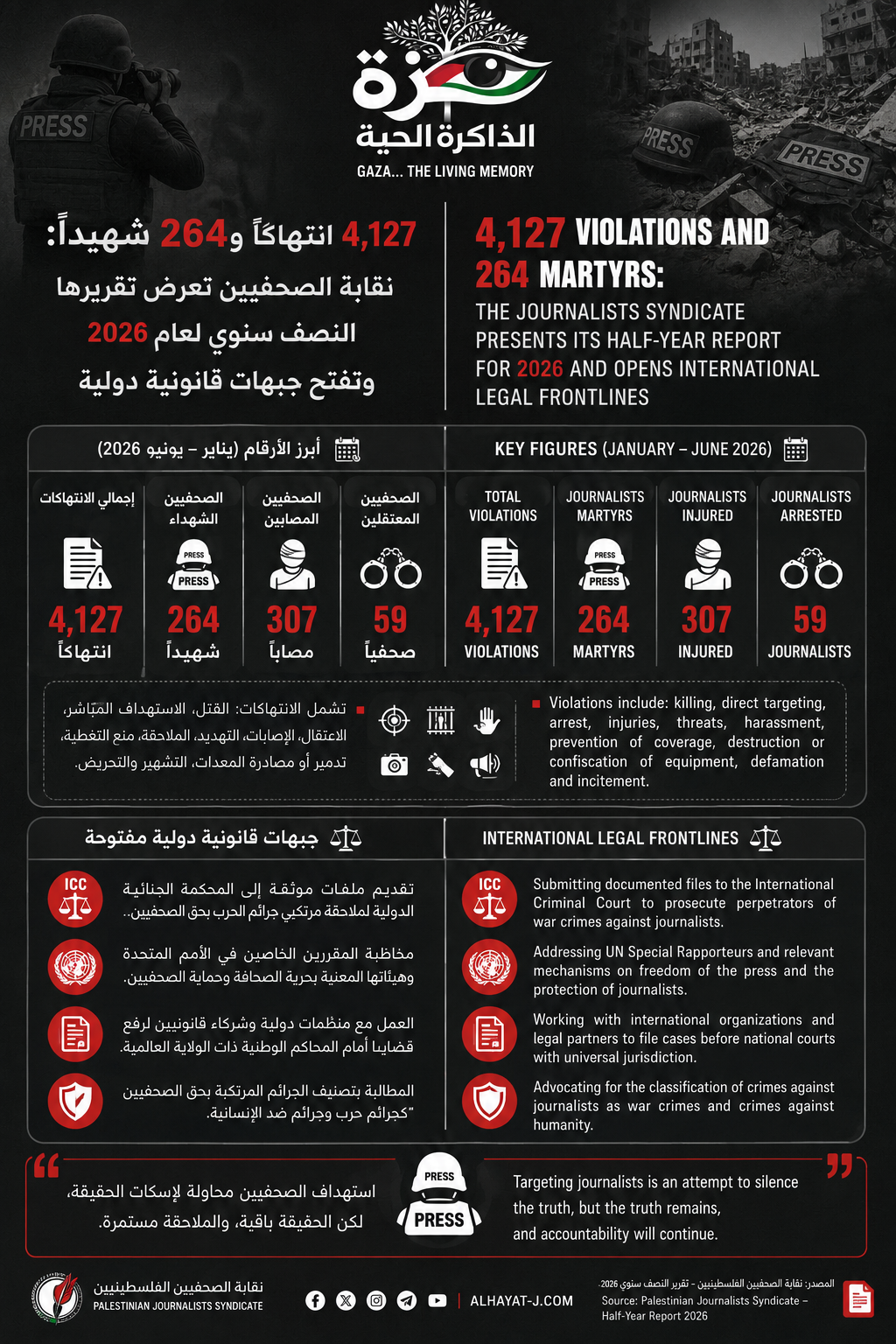
4,127 Violations and 264 Martyrs: Palestinian Journalists Syndicate Presents 2026 Mid-Year Report and Opens International Legal Fronts

The Palestinian Journalists Syndicate (PJS) presented its mid-year press freedom report for 2026 during a press conference in Ramallah, revealing a severe toll of crimes committed against media crews and press institutions, emphasizing that the ongoing targeting constitutes a systematic policy to black out coverage and suppress the Palestinian narrative.

According to data issued by the Syndicate’s Freedoms Committee, 264 journalists and media workers have been killed since October 7, 2023, through mid-2026. The report documented a cumulative total of 4,127 violations, including severe injuries, arbitrary arrests, direct strikes on journalists' homes and families, as well as the destruction of hundreds of media headquarters and offices.

The report highlighted that the first half of 2026 alone recorded 467 crimes and violations, with coverage bans and the detention of field crews accounting for over 41% of cases, alongside escalating field bans, equipment seizures, and digital censorship.

On the legal front, PJS President Nasser Abu Bakr announced international legal proceedings led by the Syndicate alongside the International Federation of Journalists (IFJ). These actions include filing war crimes lawsuits before the High Court of Paris and following up on submissions with the International Criminal Court (ICC), urging the court to expedite investigations to hold perpetrators accountable and end impunity.

.